


Please Leave Us A Message
Privacy statement: Your privacy is very important to Us. Our company promises not to disclose your personal information to any external company with out your explicit permission.

Pinghu Kaili New Energy Technology Co., Ltd.
A dry room is specified in dew point, not relative humidity — and the number must match the chemistry, not the building. Cell assembly and electrolyte filling commonly sit at −40°C to −45°C dew point, while high-nickel or sulfide programs may need −60°C. Getting that decision wrong either kills cell quality or burns electricity for years. This guide explains where moisture damages a cell, why cooling coils hit a hard limit, and what a purchase order must say before a supplier is allowed to quote. Kaili engineers humidity and temperature systems for battery lines from our plant in Pinghu, China.
Water reacts with LiPF₆ to form hydrofluoric acid, which corrodes electrodes, raises impedance, drives gas generation and shortens cycle life. That is why the coating, winding, assembly and filling stages are among the most moisture-sensitive parts of a cell plant. At these levels relative humidity is almost meaningless — a dew point of −40°C is roughly 100 ppmv of water, while −60°C is about 10 ppmv. The last order of magnitude costs a disproportionate amount of energy.
Refrigerant coils remove water by cooling air below its dew point. They work down to roughly +5°C to +8°C dew point; push lower and the coil ices, defrost cycles eat runtime and the achievable condition flatlines. For a battery dry room you need a different mechanism: a rotating wheel of silica gel or molecular sieve adsorbs water directly, and a heated regeneration stream continuously dries a section of that wheel. A purpose-built Industrial Dehumidifier of this type can hold −60°C or lower when the room envelope is tight.
The air path in a real plant looks like this:
Two design rules are routinely missed. First, solvent-laden coating exhaust must never enter the desiccant rotor: NMP vapour fouls the sieve, cuts capacity and adds fire risk. Keep those streams separate. Second, the supply-air dew point must be lower than the room target — typically around −50°C supply for a −40°C room — because people, materials and door cycles keep adding moisture. An undersized Dehumidifier cannot compensate for a leaky envelope; sealing the room is usually cheaper than adding rotor capacity.
| Process zone | Typical dew point | Design note |
| General handling and storage | −30°C to −35°C | Background level |
| Cell assembly, filling, sealing | −40°C to −45°C | Standard lithium-ion requirement |
| High-nickel, silicon, lithium-metal | −50°C to −60°C | Tighter chemistry limits |
| Sulfide solid-state and pilot lines | −60°C and below | H₂S risk from moisture |
✅ Bottom line: Set each zone's dew point from the chemistry, then design the rotor, envelope and supply-air condition together — never from a single RH number.
Four items decide whether the room will perform: a zone-by-zone dew point map, sensor specification and calibration, redundancy, and an acceptance test under realistic traffic. Without them, a quotation is only a box with a number on it.
Start with the zone map. Name the dew point for coating, stacking, winding, filling and sealing separately, together with occupancy and door-opening assumptions for each. A single whole-building setpoint either over-specifies harmless areas or under-protects critical ones.
Sensor quality comes next. At −40°C, capacitive sensors drift; a chilled-mirror instrument or a high-accuracy capacitive device with a calibration schedule is the sensible reference. Specify supply-air and return-air measurement, differential pressure, and trend logging so that a real moisture excursion can be distinguished from a sensor fault. Place instruments near the process, not only at the machine.
Redundancy is the third item. Ask for N+1 rotor capacity or staged bypass so that regeneration or routine service never takes the room off specification. A dry room that cannot hold dew point stops production — the cost is measured in halted lines, not comfort complaints.
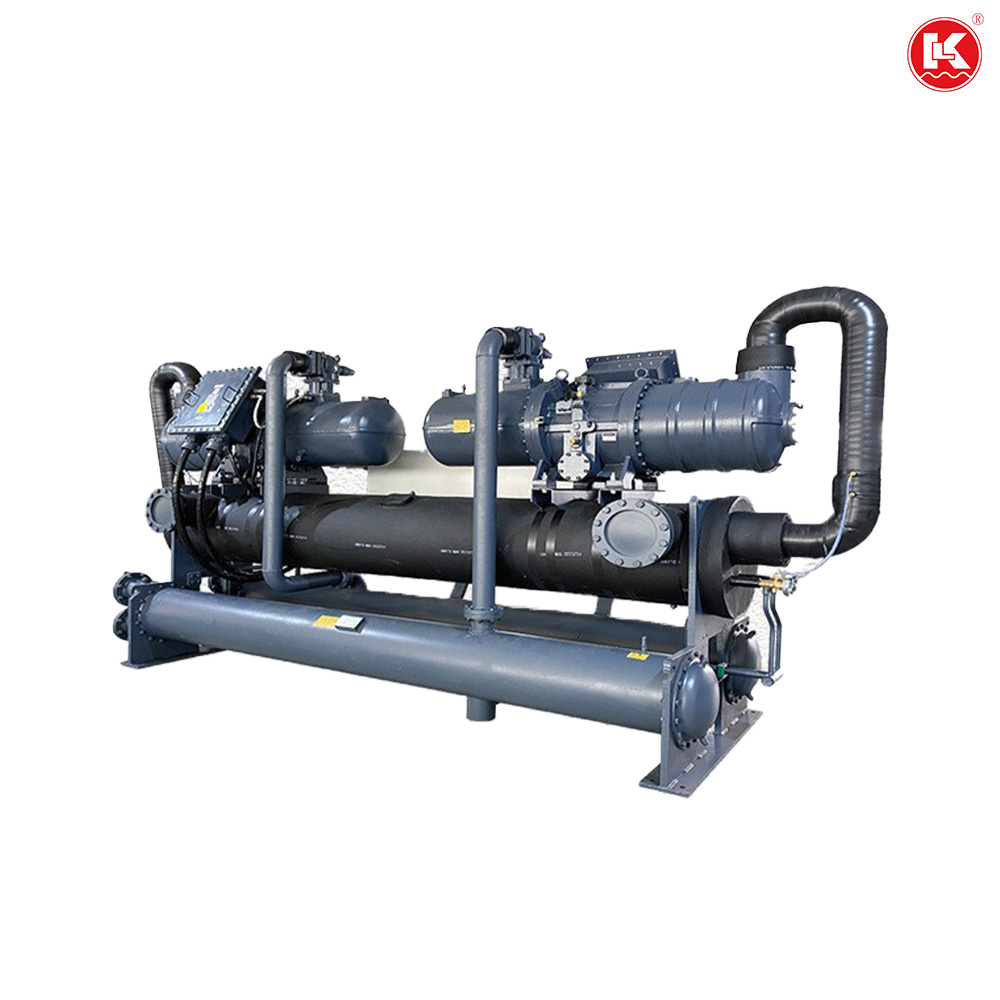
The fourth item is the acceptance test. Hold the target dew point with design occupancy and realistic door traffic, not in an empty room. Log at least seven days of data. Pinghu Kaili New Energy Technology Co., Ltd. pairs the drying chain with an Industrial Chiller for sensible cooling, because adsorption releases heat and the post-cooling stage has to remove it. As a China manufacturer offering OEM and ODM packages, Kaili can integrate the rotor, cooling loop and controls under one acceptance criterion rather than leaving the customer to arbitrate between three vendors. A conventional Air Conditioner has no role in the ultra-dry core, but it may still be correct for adjacent offices and non-process areas.
Energy deserves a line in the PO as well. Dry-room HVAC can account for 30–40% of a gigafactory's total energy use. Ask for regeneration heat recovery, variable-speed fans and part-load performance — the difference between a good and a poor design shows up every month on the utility bill, not on the invoice.
✅ Bottom line: Write zone targets, sensor calibration, redundancy and a loaded acceptance test into the order; those four clauses decide the real performance.
Q: Can a refrigerant system reach −40°C dew point? A: No. Coils frost well before that point. Desiccant adsorption is the standard route for sub-zero dew points in battery production.
Q: What is the difference between room dew point and supply-air dew point? A: The supply air is drier than the room to offset moisture from people, materials and door openings. Specifying them as the same number is a common design error.
Q: Can you provide a complete drying chain for a pilot line? A: Yes. Kaili supplies custom OEM configurations with pre-cooling, rotor drying, post-cooling and integrated controls. Send your target dew point and air volume for a proposal.
Send your cell chemistry, process layout, target output and site ambient conditions. Our engineering team will return a zone-by-zone dew point map, a moisture-load estimate, an equipment configuration and a factory-direct quotation. We also offer remote monitoring options and documented commissioning support.
Mobile: +86 13819409755
Email: 411868414@qq.com
Website: www.phkltech.com
Email to this supplier
Privacy statement: Your privacy is very important to Us. Our company promises not to disclose your personal information to any external company with out your explicit permission.
Fill in more information so that we can get in touch with you faster
Privacy statement: Your privacy is very important to Us. Our company promises not to disclose your personal information to any external company with out your explicit permission.